
Home / Craft & Quality
How a seamless liner is actually made
A liner is a thin layer of knit between a brace shell and skin. Everything that matters about it is decided by four things: whether it has a side seam, how the edges are finished, how the knit behaves when stretched, and how it comes out of the wash.
Seamless is not a marketing word
Most knitwear is cut from a flat panel and sewn up the sides. Under a brace, every sewn seam is a ridge pressing into the torso. A circular knit body removes that seam entirely — the tube comes off the machine as one piece.
Circular knit — what we do
The body is knitted as a tube on a circular machine, in one pass. There is no side seam at all, so there is no ridge line down the ribcage. The sleeve join on SS-04 is the only place with a seam, and it is finished flat.
Cut-and-sew — the usual alternative
A flat panel is cut and sewn up both sides. Cheaper per piece and easier to source in small runs, but the side seam adds a bulk line and a second layer of fabric — exactly where a brace shell presses hardest.
| Point | Circular knit (our liners) | Cut-and-sew |
|---|---|---|
| Side seam | None — knitted as a tube | One seam each side |
| Layer at the ribcage | Single layer | Two layers plus seam allowance |
| Ridge under a brace | No seam ridge | Seam ridge along the side |
| Edge finishing | Knit bind-off at neckline, armhole and hem | Overlock or folded hem |
| Small runs | Needs the right machine gauge | Easy from very small quantities |
If a style you need is not economical on a circular machine, we will say so instead of quietly switching the construction.
The five steps, in order
- Yarn inCotton/elastane or polyester/elastane, selected per style and per climate. Composition and weight go on the spec sheet, not in a slogan.
- Circular knittingThe body is knitted as a tube in one pass. Flap panels on SS-01 are knitted in the same yarn, so the flap behaves like the body when washed.
- Flat seam finishingWhere there is a join — sleeve, flap, neckline bind-off — it is finished flat and low-bulk, so the edge does not become a hard line against skin.
- Stretch and recovery checkThe knit is stretched on the bench and released. What we look for is whether it returns to the same measurements, not just whether it stretches far.
- Inspection and packingEvery piece is checked for dropped stitches, seam flatness and measurement, then polybagged and size-stickered. Cartons split by size and colour.
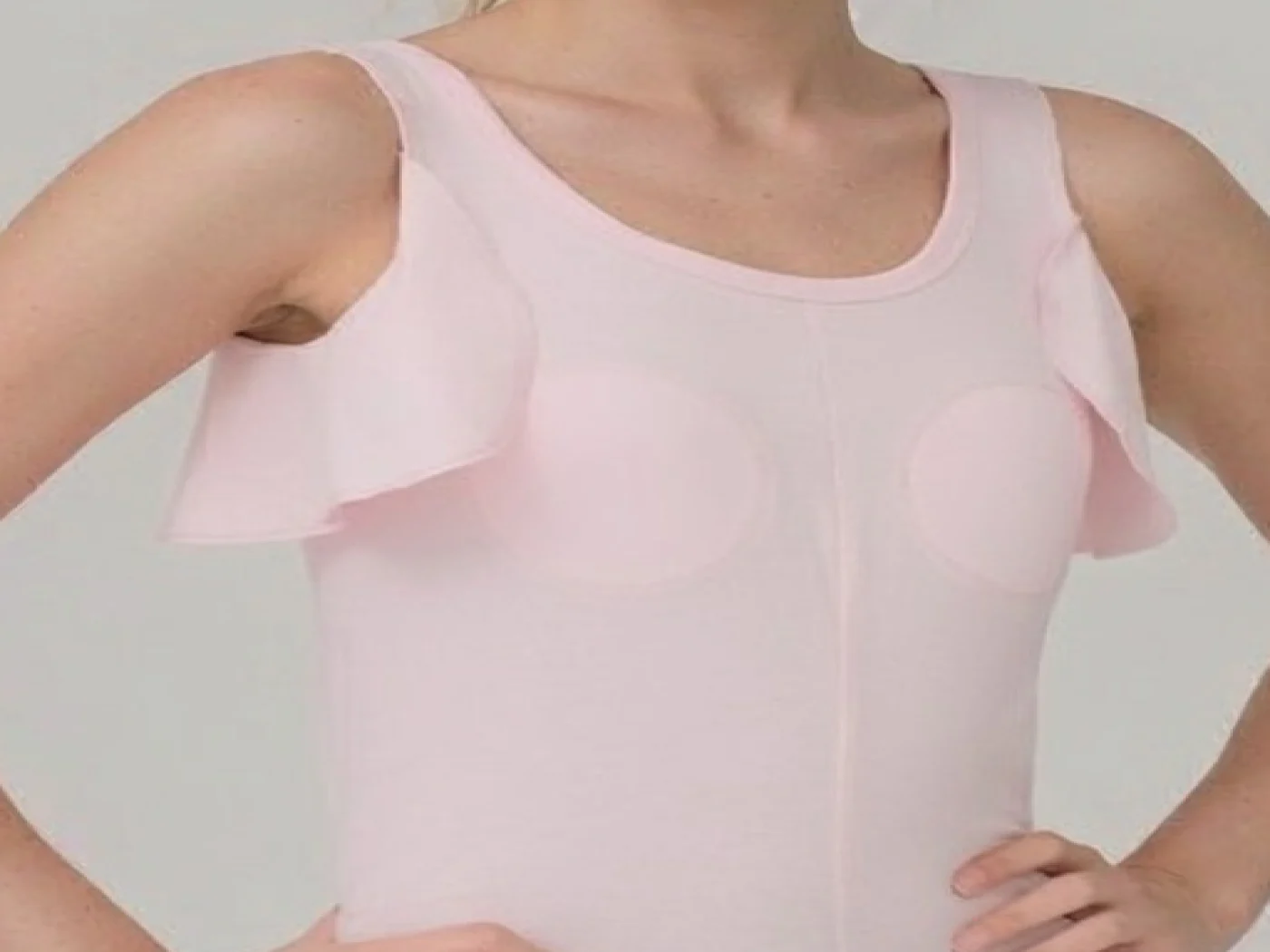
Five steps, and each one is a point where a liner either stays flat under a shell or starts to bunch. The photograph shows the step that matters most for comfort under a brace: the flap panel at the underarm, knitted in the same yarn as the body.
Machine and inspection photographs are taken on request during a factory visit or a video call. We do not publish stock images of other factories' floors.
What we measure, and why
Buyers ask for the same three things on every first order. We keep them in the spec sheet rather than in a paragraph, so you can check them against your own brace before you commit.
| Check | How it is done | What we report back |
|---|---|---|
| Measurements | Flat measurement of every size in the size run | A size table in centimetres, per style |
| Stretch & recovery | Knit stretched on the bench, released, re-measured | Stretch direction, and whether it returns to size |
| Seam flatness | Visual and touch check on the inside of every join | Photos of the seam from the inside |
| Wash behaviour | Sample washed to the care instruction, then re-measured | Any change in measurement, plus the agreed care wording |
| Shade consistency | Dyed lot compared against the approved shade card | Photos of the lot against the card |
The labelling we can confirm: fibre content, care and origin labelling is handled per order; test reports are shared on request.
We do not claim certifications we do not hold. If your market or your customer needs a specific certificate or test report, tell us in the first email and we will tell you straight whether we have it or can get it — before you order, not after.
Where we draw the line
Being clear about what these garments are is more useful to you than a page of claims. Your customer will ask, and you should have the answer ready.
These are garments. Our liners are knitted torso garments for wear under orthoses. They are not medical devices, they are not sold as medical devices, and nothing on this site describes a medical use or a medical outcome.
What you are buying. A knitted torso garment, worn as the layer between skin and a brace. It reduces friction at the edges and moves moisture away from the skin. That is the whole of the claim, and it is the part that matters to your customer.
No certificates are claimed on this site. If a document exists for a specific order, it is shared with that order. If it does not exist, we say so.